Africa CDC Officials Begin WEALTH Course Onboarding and Introductory Engagement with the WEALTH Team
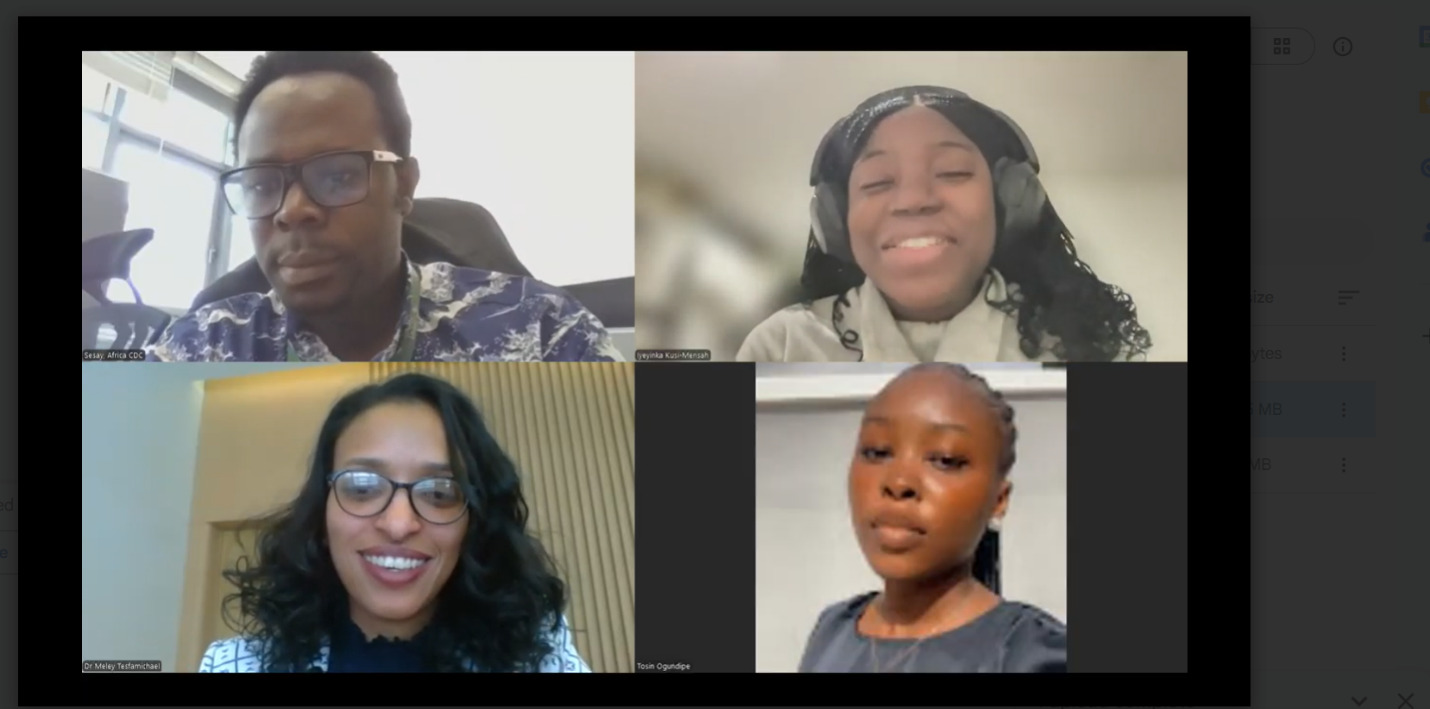
The WEALTH Project Team held an introductory onboarding session with representatives of the Africa Centres for Disease Control and Prevention (Africa CDC) as they commenced their participation in the WEALTH Course. The virtual meeting brought together technical officers from the Africa CDC headquarters in Addis Ababa, Ethiopia, and members of the WEALTH Core Team based at the College of Medicine, University of Ibadan. The meeting and interactions held on Tuesday, 4 November 2025.
Africa CDC officials present were Mr Sesay Umaru, Technical Officer for Injury Prevention and Control, and Dr Meley, Division Support Officer for Non-Communicable Diseases, Mental Health and Injury. Dr Iyeyinka Kusi Mensah, Postdoctoral Fellow I, Dr Rita Tamambang, Postdoctoral Fellow II, Mr Simeon Olaoye, Project Manager I, and Ms Oluwatosin Ogundipe, Project Manager II represented the WEALTH Team.
The meeting began with introductions from both sides, enabling participants to establish context for their collaboration. The Africa CDC representatives described their backgrounds in mental health, public health programming, policy design and injury prevention, and noted their enthusiasm to join the WEALTH Training Programme.
The WEALTH Team then provided an overview of the project. WEALTH is a three-year capacity-building and research initiative funded by the Gates Foundation and implemented at the College of Medicine, University of Ibadan. The project seeks to strengthen the capacity of early to mid-career researchers and policymakers across Sub-Saharan Africa to apply mathematical modelling to depression and related mental health conditions affecting adolescent girls and young women. The project has recruited 167 participants from 18 countries across the continent, following a competitive application process.
Detailed Presentation on Course Structure and Expectations
Mr Olaoye delivered a comprehensive presentation on the structure of the WEALTH Course. He explained that the programme is divided into three key components:
- A four-week introductory phase
- A five-month intensive coursework phase
- A research and mentorship phase lasting twelve to eighteen months
Participants will study nine modules covering mathematical modelling, statistical analysis, epidemiological principles, spatial analysis, brain and mental health, gender studies, health economics and academic writing. They will be required to complete assignments, tests and a final research project that culminates in a publication and a policy brief. The modelling aspects of the course are taught using the R software environment, with full technical assistance provided.
The Africa CDC representatives were able to clarify questions regarding data availability, the use of the R software and how they would integrate into the existing cohort.
At the close of the session, the WEALTH Team invited the Africa CDC participants to complete a short pre-training screening test. This test has been administered to all newly admitted trainees and is designed to assess baseline knowledge across introductory areas of the course. The Africa CDC officials agreed to complete the screening test the following day, after which they will receive their Moodle login details and begin the introductory training phase.
Both teams concluded the meeting by reaffirming their commitment to collaboration. The Africa CDC officials' participation is expected to strengthen collective efforts to improve mental health outcomes for adolescent girls and young women and enhance evidence-informed decision-making across the continent.